
 Image 1 of 3
 Image 2 of 3
 Image 3 of 3
Eucalyptus has received a lot of bad press in Portugal. It is non-native and burns quickly in forest fires.
Nevertheless, eucalyptus composes roughly 25% of forests across the country, contributing nearly 3 billion euros to annual GDP and tens of thousands of jobs in paper exports.
Recently, some environmentalists have begun reversing course, touting the benefits of Eucalyptus previously unknown or ignored.
For example, eucalyptus composes the largest CO2-capturing force in all of Portugal— over 50% of carbon capture coming from eucalyptus forests alone. It possesses an impressive oxygen-producing capacity— over three times higher than native cork oak forests.
More praises?
It’s being grown strategically around the world to remove the stagnant water that supports mosquito populations (hence fighting malaria). It is used to cleanse wastewater, naturally filtering out heavy metals and bacteria to improve the quality of crop water.
It grows more quickly than bamboo, making it superior for flooring and furniture (a relatively new usage trajectory), as well as offering superior resistance to water rot and insects.
Its powerful “cineole” compound has been used for centuries in both Ayurvedic medicine and Western hospitals. It’s a powerful disinfectant, respiratory infection cure, and a topical skin wound medication. (And we all witnessed Robert Redford detox a stolen racehorse from its drug-induced stupor with eucalyptus smoke. You missed that scene? Well, drop everything and go see “Electric Horseman”!)
On the less practical side, it has an ardent following for its beauty in flower arrangements— especially for its juvenile, silvery, coin-shaped leaves— and occasionally for its longer, greener, mature leaves.
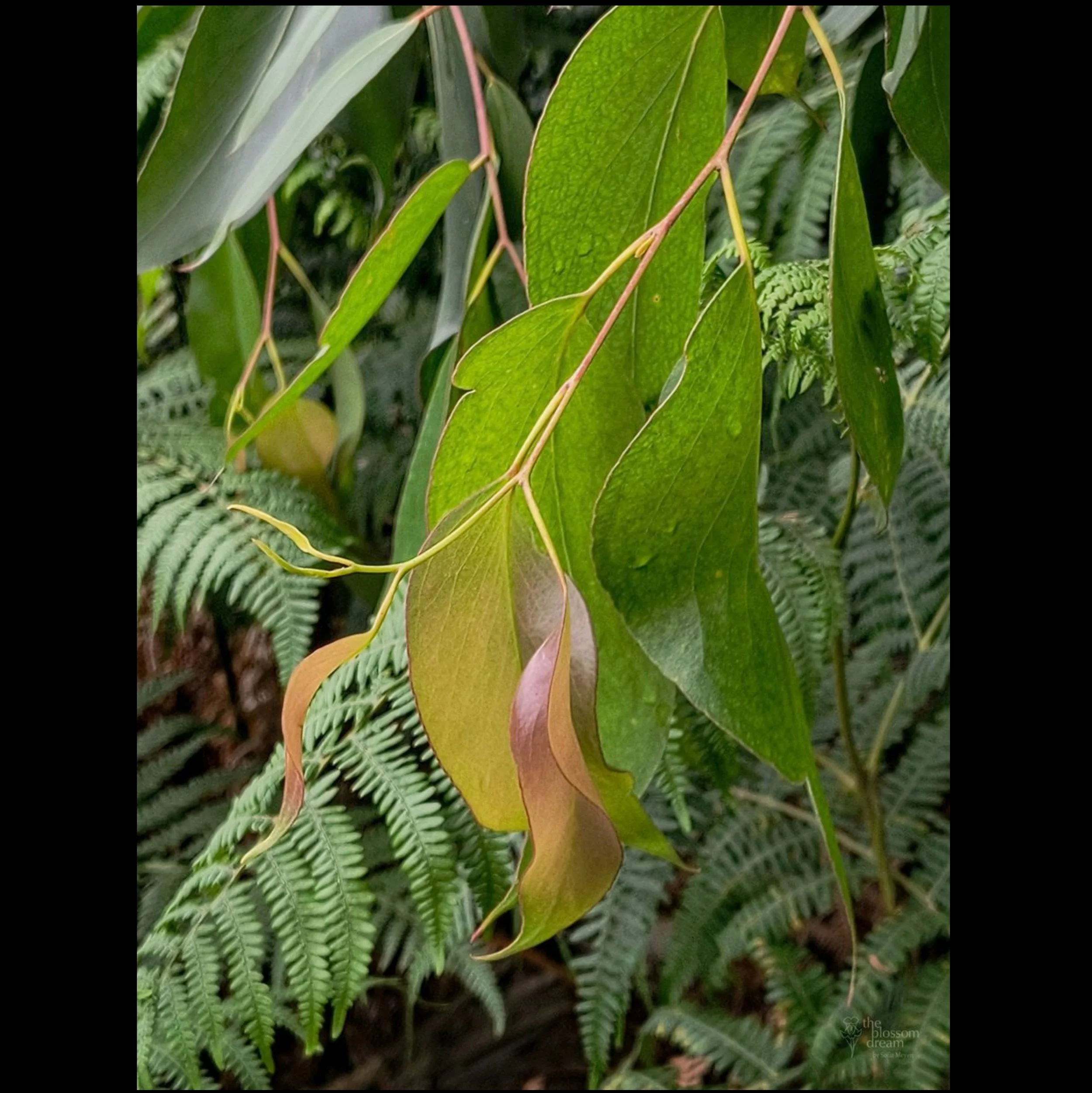
In the Philippines, the so-called “Rainbow Eucalyptus” features a bright, multi-colored bark. But in my view, Portugal’s common species— the Blue Gum Eucalyptus— offers a subtler, more understanded beauty. The freshest leaves display soft orange and pink tones, as well as a dreamy kind of translucence when viewed in front of a sunset.
Next to this, the Rainbow Eucalyptus looks downright garish.
I opted for soft focus to amplify their ethereal quality. This photo fills me with gratitude for evocative beauty found in the humblest of places.
Eucalyptus has received a lot of bad press in Portugal. It is non-native and burns quickly in forest fires.
Nevertheless, eucalyptus composes roughly 25% of forests across the country, contributing nearly 3 billion euros to annual GDP and tens of thousands of jobs in paper exports.
Recently, some environmentalists have begun reversing course, touting the benefits of Eucalyptus previously unknown or ignored.
For example, eucalyptus composes the largest CO2-capturing force in all of Portugal— over 50% of carbon capture coming from eucalyptus forests alone. It possesses an impressive oxygen-producing capacity— over three times higher than native cork oak forests.
More praises?
It’s being grown strategically around the world to remove the stagnant water that supports mosquito populations (hence fighting malaria). It is used to cleanse wastewater, naturally filtering out heavy metals and bacteria to improve the quality of crop water.
It grows more quickly than bamboo, making it superior for flooring and furniture (a relatively new usage trajectory), as well as offering superior resistance to water rot and insects.
Its powerful “cineole” compound has been used for centuries in both Ayurvedic medicine and Western hospitals. It’s a powerful disinfectant, respiratory infection cure, and a topical skin wound medication. (And we all witnessed Robert Redford detox a stolen racehorse from its drug-induced stupor with eucalyptus smoke. You missed that scene? Well, drop everything and go see “Electric Horseman”!)
On the less practical side, it has an ardent following for its beauty in flower arrangements— especially for its juvenile, silvery, coin-shaped leaves— and occasionally for its longer, greener, mature leaves.
In the Philippines, the so-called “Rainbow Eucalyptus” features a bright, multi-colored bark. But in my view, Portugal’s common species— the Blue Gum Eucalyptus— offers a subtler, more understanded beauty. The freshest leaves display soft orange and pink tones, as well as a dreamy kind of translucence when viewed in front of a sunset.
Next to this, the Rainbow Eucalyptus looks downright garish.
I opted for soft focus to amplify their ethereal quality. This photo fills me with gratitude for evocative beauty found in the humblest of places.