
 Image 1 of 3
 Image 2 of 3
 Image 3 of 3
Evening primrose plants are insulted, humiliated, and feared by gardeners. An abundance of articles and videos attest to their underground rhizome system and prolific seeding capabilities. However, the tiny, wild, pink variety of Portugal and Spain is so ignored that it is quite difficult to find any information on them.
This miniature beauty actually opens during the day rather than the night (hence the name: evening primrose), and its tiny blooms are smaller than 1/3 of an inch in diameter.
These tiny plants have their work cut out for them— attempting to wrest a tiny bit of water and sun from the larger, sturdier plants that surround them. In addition, their tiny leaves are eaten to shreds by a tiny, reflective, green beetle (that I have yet to identify)— that frequently do not allow them to even bloom.
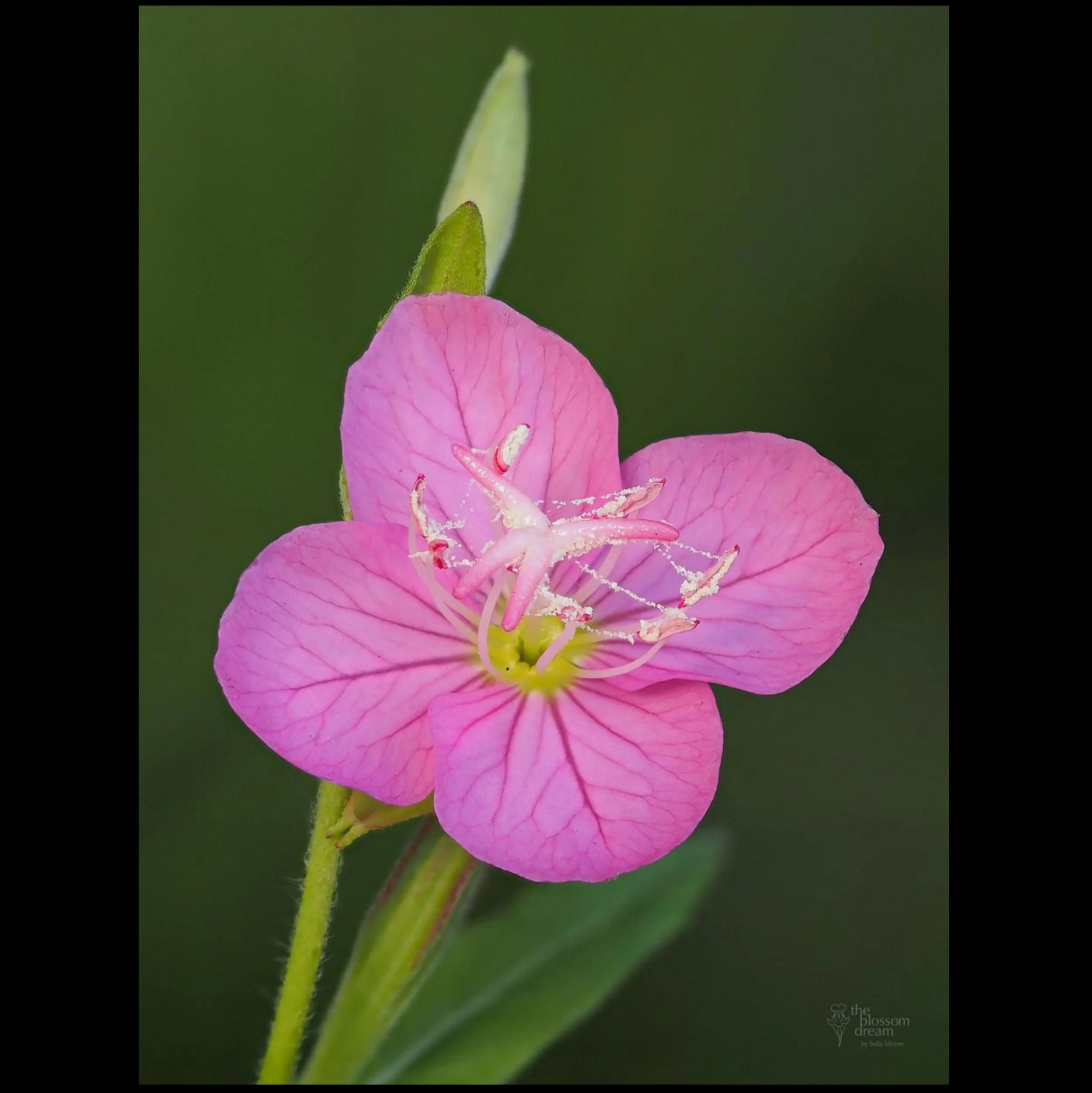
As I started to photograph them, I first misidentified the web-like structures at the center of the tiny flowers— thinking they were spider webs that had caught pollen from the stamens. But after studying my photos, I came to realize they were part of the flower itself. “Viscin threads” connect the pollen grains together, helping the pollen stick to a bee’s body, and then be transfered from the eight pink anthers to the white, cross-shaped stigma.
I can still barely fathom the unique beauty contained within these absurdly tiny flowers. The bright fuchsia petals, the even-darker magenta veins sprouting from the bloom’s center, and the shiny white “double snake tongue” stigma at the center, its shiny, chubby arms turning into the same hot pink of the petals only at the very tip…
This flower may be fairy-sized, but in the world of macro, it’s a real show-stopper.
Evening primrose plants are insulted, humiliated, and feared by gardeners. An abundance of articles and videos attest to their underground rhizome system and prolific seeding capabilities. However, the tiny, wild, pink variety of Portugal and Spain is so ignored that it is quite difficult to find any information on them.
This miniature beauty actually opens during the day rather than the night (hence the name: evening primrose), and its tiny blooms are smaller than 1/3 of an inch in diameter.
These tiny plants have their work cut out for them— attempting to wrest a tiny bit of water and sun from the larger, sturdier plants that surround them. In addition, their tiny leaves are eaten to shreds by a tiny, reflective, green beetle (that I have yet to identify)— that frequently do not allow them to even bloom.
As I started to photograph them, I first misidentified the web-like structures at the center of the tiny flowers— thinking they were spider webs that had caught pollen from the stamens. But after studying my photos, I came to realize they were part of the flower itself. “Viscin threads” connect the pollen grains together, helping the pollen stick to a bee’s body, and then be transfered from the eight pink anthers to the white, cross-shaped stigma.
I can still barely fathom the unique beauty contained within these absurdly tiny flowers. The bright fuchsia petals, the even-darker magenta veins sprouting from the bloom’s center, and the shiny white “double snake tongue” stigma at the center, its shiny, chubby arms turning into the same hot pink of the petals only at the very tip…
This flower may be fairy-sized, but in the world of macro, it’s a real show-stopper.