
 Image 1 of 3
 Image 2 of 3
 Image 3 of 3
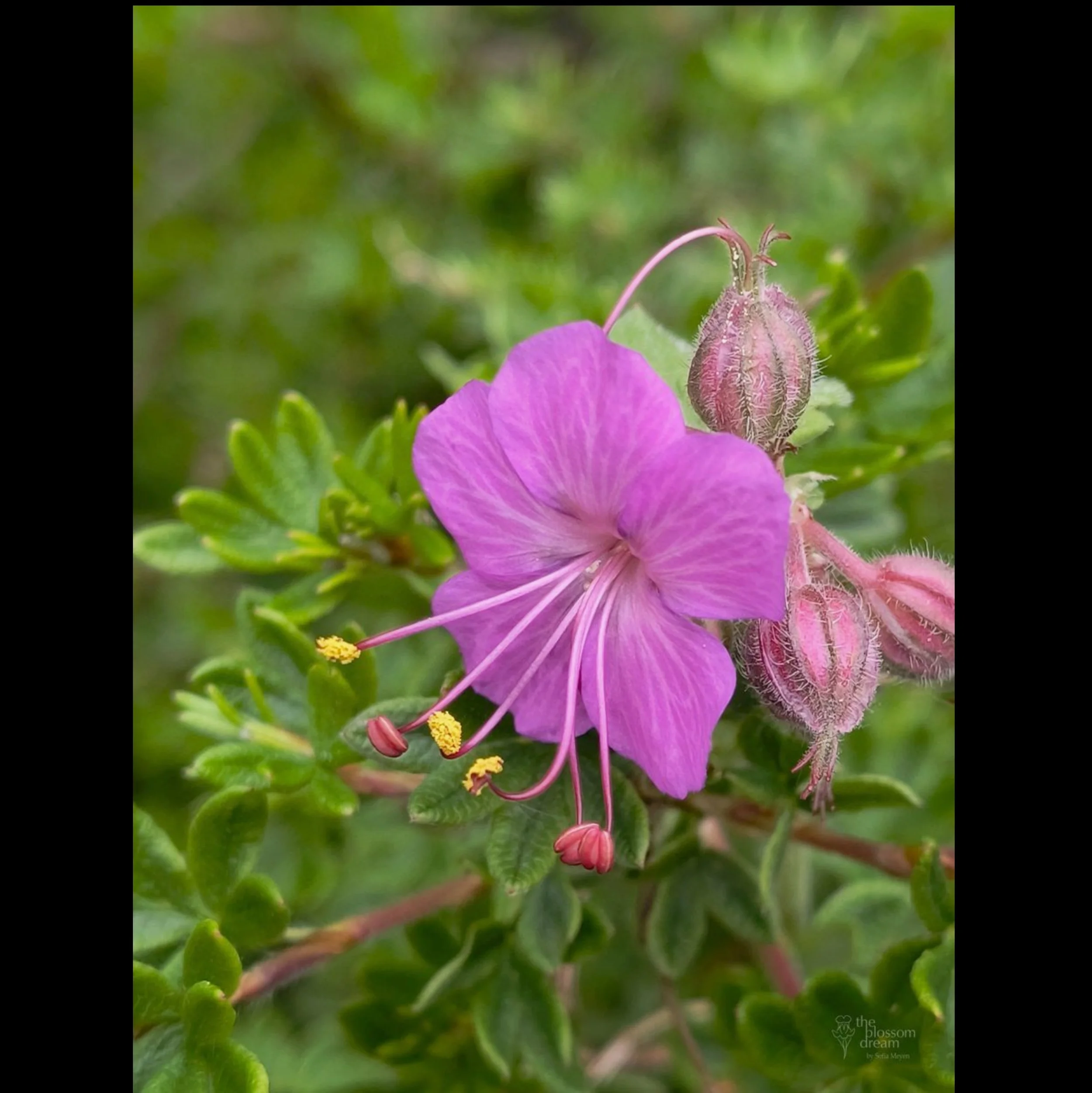
If you hike along the edges of Germany’s Black Forest, you will find a wide variety of wildflowers. My favorite is this little gem: the Cranesbill macrorrhizum. Named after its seed pods (which do, in fact, mimic the profile of a crane’s head), this magenta-colored beauty features long, dramatically swooping filaments and styles. These constitute the male and female stalks with which the flower extends anthers and stigmas to pollinators.
Its petals feature pale pink veins that culminate in even lighter pink base— from which all those tiny stalks emerge.
Meanwhile, the dramatic magenta of the petals deepens to a dark purple just before the final splash of pale pink usurps the center.
Yet another color— a warm fuchsia tone— allows the seed pods to complement the exquisite ombre coloring of the petals. Finally, macro photography allows the delicate, hair-like structures lining the ribs of the seed pods to emerge.
The entire plant exudes a delightful aroma of mint. The overall effect: heavenly.
If you hike along the edges of Germany’s Black Forest, you will find a wide variety of wildflowers. My favorite is this little gem: the Cranesbill macrorrhizum. Named after its seed pods (which do, in fact, mimic the profile of a crane’s head), this magenta-colored beauty features long, dramatically swooping filaments and styles. These constitute the male and female stalks with which the flower extends anthers and stigmas to pollinators.
Its petals feature pale pink veins that culminate in even lighter pink base— from which all those tiny stalks emerge.
Meanwhile, the dramatic magenta of the petals deepens to a dark purple just before the final splash of pale pink usurps the center.
Yet another color— a warm fuchsia tone— allows the seed pods to complement the exquisite ombre coloring of the petals. Finally, macro photography allows the delicate, hair-like structures lining the ribs of the seed pods to emerge.
The entire plant exudes a delightful aroma of mint. The overall effect: heavenly.