
 Image 1 of 3
 Image 2 of 3
 Image 3 of 3
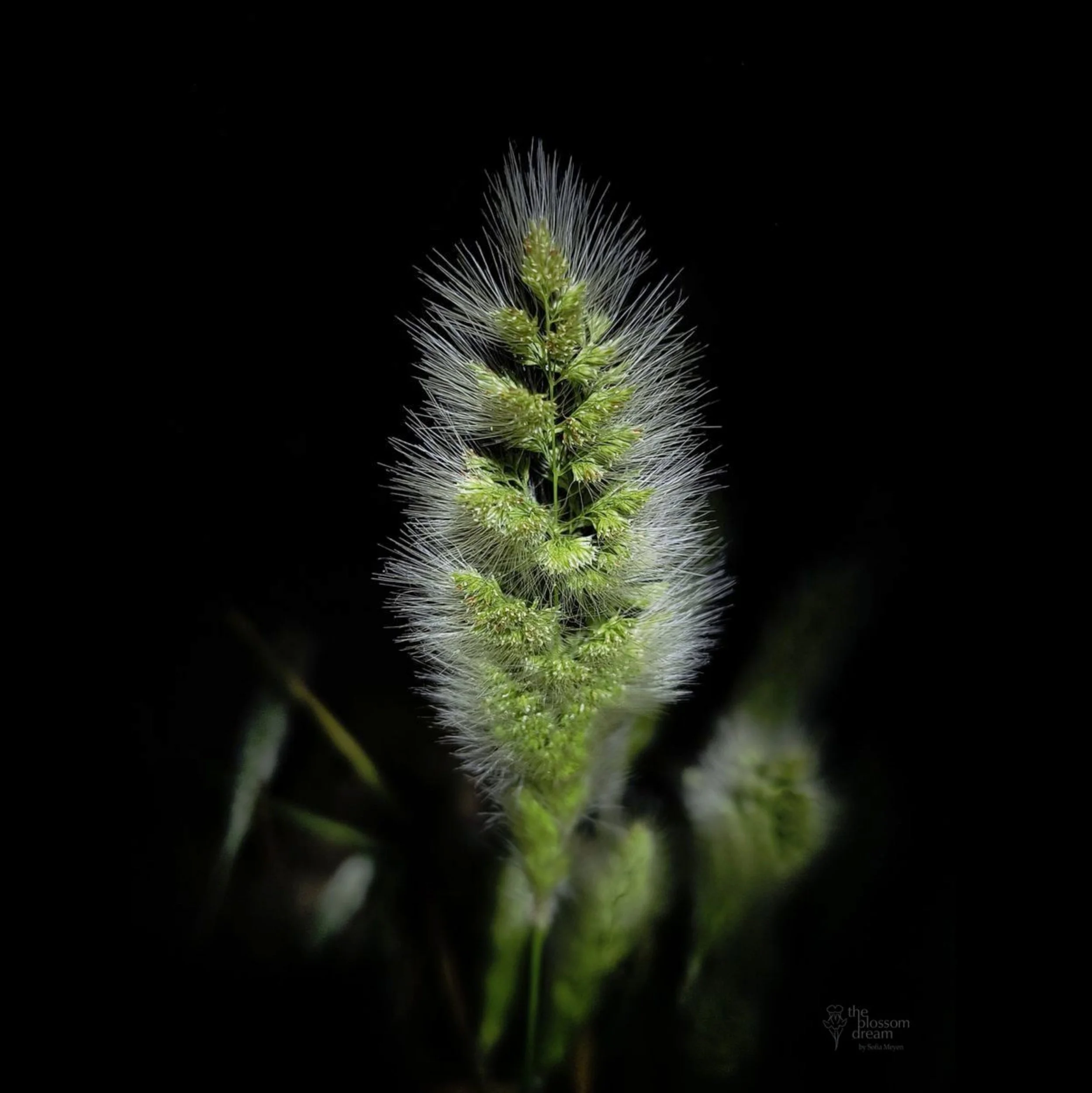
Deep within the Hollywood Hills of California, my headlamp picked up this beauty.
A lowly weed?
Or a dramatic and beautiful specimen of the spiraling Golden Ratio of 1.618, optimizing growing efficiency and light exposure while minimizing structural gaps?
You decide.
Meanwhile, please enjoy some “food for thought” about so-called invasive plant species (of which Annual Rabbitsfoot Grass is an official member):
They often improve damaged soil that has been compacted, polluted, or rendered infertile through pesticides or other poisons.
They can prevent erosion by sending their roots deep into soil that would otherwise disappear through wind, rain, or drought. (Roots are highly effective at holding soil.)
Many so-called “invasives” offer fruit, pollen, or nectar to insects, birds, and mammals that need them to survive.
They can provide critical nesting and refuge spaces for endangered animals.
Non-native plants often provide “green cover” and carbon sequestering. Often, they also demonstrate a strong resilience to changing weather patterns.
Annual Rabbitsfoot Grass checks each of these boxes.
Beyond this, it boasts a soft and fluffy “inflorescence,” or arrangement of flowers on a single primary stem. Its name is an ode to its appearance, which mimics the furry foot of a rabbit.
I was struck by its intricate, delicate, symmetric design— as well as the fact that it managed to create its own halo effect. I found this one particularly striking when illuminated in front of pure darkness.
Deep within the Hollywood Hills of California, my headlamp picked up this beauty.
A lowly weed?
Or a dramatic and beautiful specimen of the spiraling Golden Ratio of 1.618, optimizing growing efficiency and light exposure while minimizing structural gaps?
You decide.
Meanwhile, please enjoy some “food for thought” about so-called invasive plant species (of which Annual Rabbitsfoot Grass is an official member):
They often improve damaged soil that has been compacted, polluted, or rendered infertile through pesticides or other poisons.
They can prevent erosion by sending their roots deep into soil that would otherwise disappear through wind, rain, or drought. (Roots are highly effective at holding soil.)
Many so-called “invasives” offer fruit, pollen, or nectar to insects, birds, and mammals that need them to survive.
They can provide critical nesting and refuge spaces for endangered animals.
Non-native plants often provide “green cover” and carbon sequestering. Often, they also demonstrate a strong resilience to changing weather patterns.
Annual Rabbitsfoot Grass checks each of these boxes.
Beyond this, it boasts a soft and fluffy “inflorescence,” or arrangement of flowers on a single primary stem. Its name is an ode to its appearance, which mimics the furry foot of a rabbit.
I was struck by its intricate, delicate, symmetric design— as well as the fact that it managed to create its own halo effect. I found this one particularly striking when illuminated in front of pure darkness.