
 Image 1 of 3
 Image 2 of 3
 Image 3 of 3
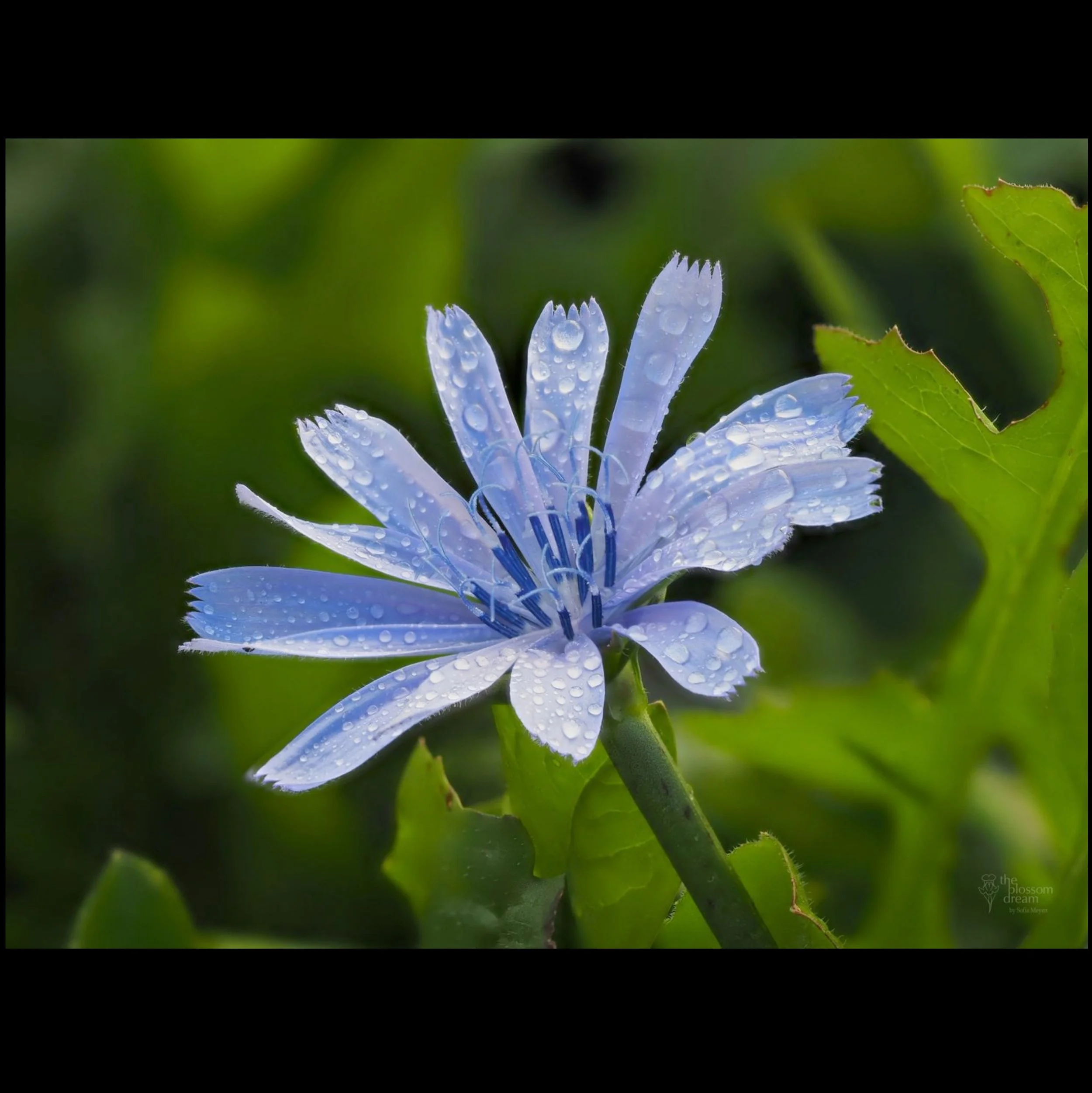
These charming lavender blooms accompany all Italian “bitter lettuces”: radicchio, endive, escarole, and frisee, among others.
When planted in the late summer (at the end of July in NE Italy, where they originate), they create lettuce heads that can be harvested throughout the winter. But when planted in the spring, they skip the lettuce phase entirely and proceed directly to producing these wavy-petaled flowers with sparkly blue “stick of dynamite” filaments protruding from their centers.
The roots can be roasted to create that famous “chicory coffee” (great flavor, no caffeine). The leaves and flowers can be eaten raw. Looking closely, you’ll notice parallels between chicory and dandelion flowers, as they are closely related. (Roasted dandelion root also yields a wonderful coffee substitute that naturally lowers blood pressure).
While hiking along one cold morning, I came upon a veritable meadow of these striking lavender blooms. Upon further inspection, I was rewarded by the sight of a chubby bumble bee that had “fallen asleep” from the cold while gathering pollen the day before. As I rushed to photograph him (see blog page), he gradually awakened from his stupor, crawling around and eventually flying from bloom to bloom as the morning sun warmed him.
Difficult to transplant due to a very long taproot, I have, in the end, decided I must content myself with admiring them in fields rather than the privacy of my garden.
Walking across these fields, it is a joy to see so many varieties of bees express their ardent admiration for this beautiful flower as well!
These charming lavender blooms accompany all Italian “bitter lettuces”: radicchio, endive, escarole, and frisee, among others.
When planted in the late summer (at the end of July in NE Italy, where they originate), they create lettuce heads that can be harvested throughout the winter. But when planted in the spring, they skip the lettuce phase entirely and proceed directly to producing these wavy-petaled flowers with sparkly blue “stick of dynamite” filaments protruding from their centers.
The roots can be roasted to create that famous “chicory coffee” (great flavor, no caffeine). The leaves and flowers can be eaten raw. Looking closely, you’ll notice parallels between chicory and dandelion flowers, as they are closely related. (Roasted dandelion root also yields a wonderful coffee substitute that naturally lowers blood pressure).
While hiking along one cold morning, I came upon a veritable meadow of these striking lavender blooms. Upon further inspection, I was rewarded by the sight of a chubby bumble bee that had “fallen asleep” from the cold while gathering pollen the day before. As I rushed to photograph him (see blog page), he gradually awakened from his stupor, crawling around and eventually flying from bloom to bloom as the morning sun warmed him.
Difficult to transplant due to a very long taproot, I have, in the end, decided I must content myself with admiring them in fields rather than the privacy of my garden.
Walking across these fields, it is a joy to see so many varieties of bees express their ardent admiration for this beautiful flower as well!