
 Image 1 of 3
 Image 2 of 3
 Image 3 of 3
Apple seeds do not produce apples with similar characteristics to their “source” apple.
In fact, every apple seed will create a brand new variety because their blossoms cannot self-pollinate. That is, pollen from the same tree will be rejected by its other blossoms.
Farmers have overcome this problem vby grafting desirable apples onto other apple trunks. But this means apple trees sprouting from random seeds will essentially only produce hard, bitter apples— useful for hard cider, and not much else.
This tree is a modest example. It sprouted at the foot of Igreja de Maria Madalena in Braga, a lovely Baroque church built nearly 300 years ago. The tree fades into the background 8 months out of the year. Pine, oak, and chestnut trees all tower over it.
But come April, this little tree puts its neighbors to shame, as it lights up this tiny “forest” with a flurry of shimmery, translucent pink and white blossoms, followed by kelly green leaves, and finally, shiny green apples for the birds to enjoy.
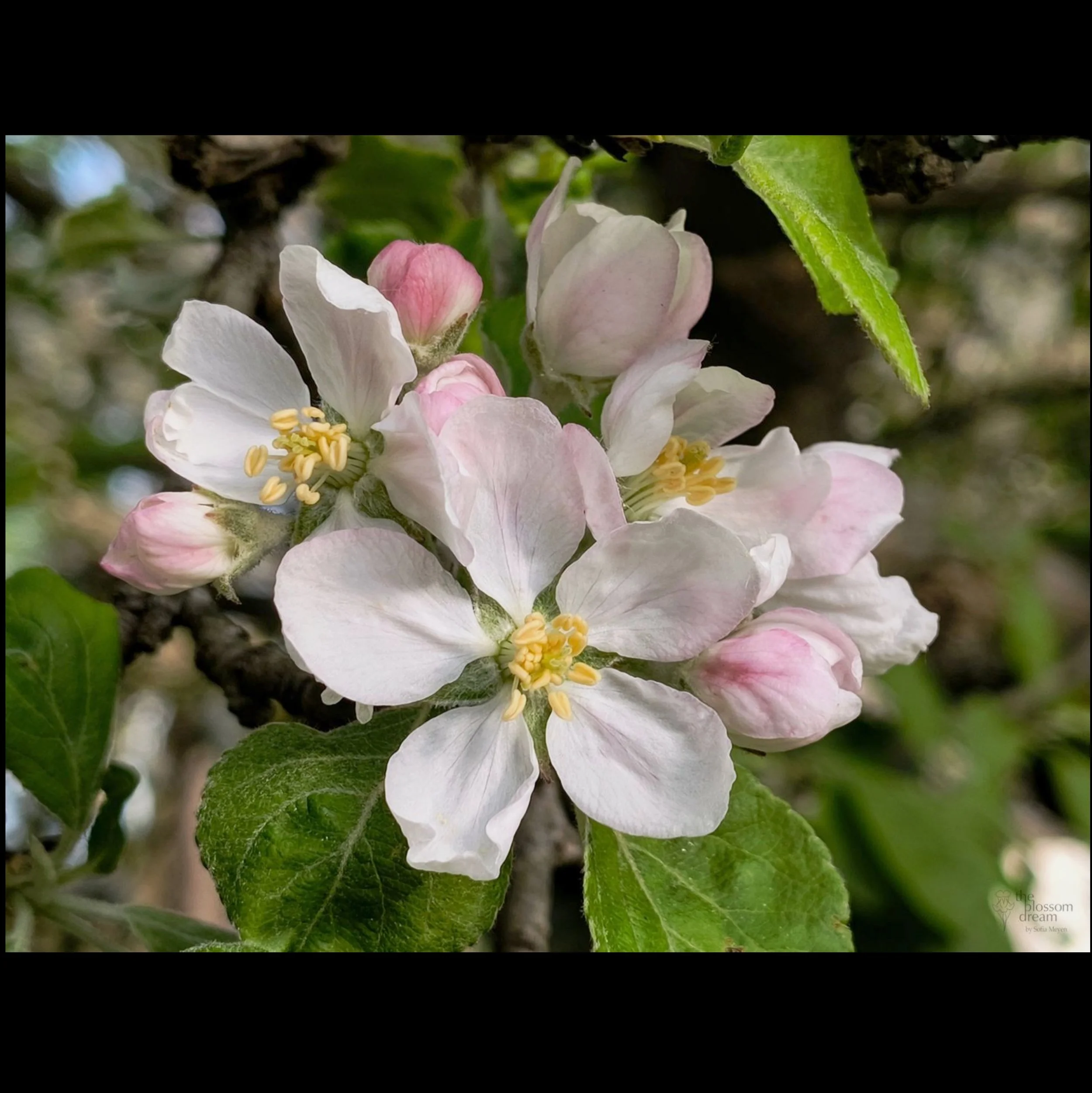
But oh, the blossoms! The outermost edge of each delicately-veined petal is tipped with a “barely-there” kiss of pale pink, then surrounded by tiny buds of the deepest, loveliest shade of fuchsia.
In the center, tiny equidistant filaments rise like tiny mint-frosted columns, culminating in perfectly-formed, yellow anther cups. Between the narrow white petal bases, downy white fur shimmers above the gentle green of the sepals.
But back to those petals, with their delicate, craggy texture— the way light bounces off— but also, passes right through them— this, for me, is the glory of the apple blossom.
The fruit is inedible?
No problem.
Apple seeds do not produce apples with similar characteristics to their “source” apple.
In fact, every apple seed will create a brand new variety because their blossoms cannot self-pollinate. That is, pollen from the same tree will be rejected by its other blossoms.
Farmers have overcome this problem vby grafting desirable apples onto other apple trunks. But this means apple trees sprouting from random seeds will essentially only produce hard, bitter apples— useful for hard cider, and not much else.
This tree is a modest example. It sprouted at the foot of Igreja de Maria Madalena in Braga, a lovely Baroque church built nearly 300 years ago. The tree fades into the background 8 months out of the year. Pine, oak, and chestnut trees all tower over it.
But come April, this little tree puts its neighbors to shame, as it lights up this tiny “forest” with a flurry of shimmery, translucent pink and white blossoms, followed by kelly green leaves, and finally, shiny green apples for the birds to enjoy.
But oh, the blossoms! The outermost edge of each delicately-veined petal is tipped with a “barely-there” kiss of pale pink, then surrounded by tiny buds of the deepest, loveliest shade of fuchsia.
In the center, tiny equidistant filaments rise like tiny mint-frosted columns, culminating in perfectly-formed, yellow anther cups. Between the narrow white petal bases, downy white fur shimmers above the gentle green of the sepals.
But back to those petals, with their delicate, craggy texture— the way light bounces off— but also, passes right through them— this, for me, is the glory of the apple blossom.
The fruit is inedible?
No problem.