
 Image 1 of 3
 Image 2 of 3
 Image 3 of 3
Portugal has a variety of fluffy, pudgy, friendly bees (and by friendly, I mean they are unafraid, so you can view them up close). However, shooting them with a camera is a different matter. They are busy and quick, busy and quick— then gone! I had been trying for a year to get a shot.
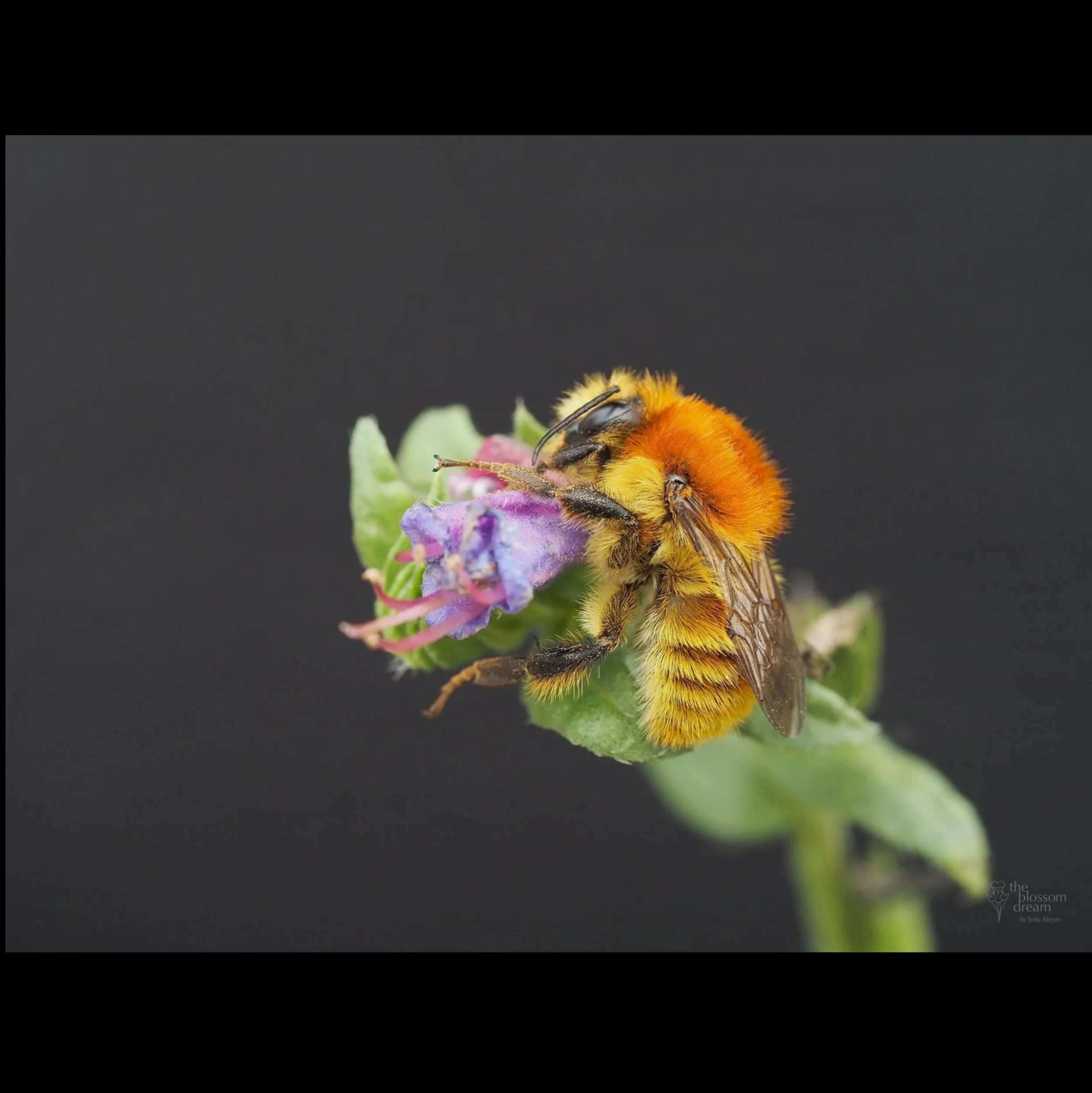
Imagine my surprise when, one cold day in October, this fluffy yellow and orange creature came wandering among the flowers— with no intention of flying anywhere. I spent hours observing him, knowing this was likely his last trip.
Common carder bees build nests on the ground, often taking over old birds’ nests and mouse holes. They comb or “card” together dried plants and leaves to cover the cells containing larvae; hence the name “carder bees.” By August, a colony will achieve its maximum population of 60-150 bees. By October, all the bees will have died but for a few “baby” queens. These fly away to hibernate, beginning their own tiny colonies (starting with half-size bees) as soon as warm temperatures re-animate them. This usually occurs in April.
There is no continuing colony— just a fresh start!
This beautiful little bee crawled slowly around his flowers— and occasionally across my hands. I wanted so badly for his life to be nowhere near finished. I was smitten. God had given me a gift, but what I really wanted was for him to have his strength and life back. I had to cry. He felt so incredibly special.
Portugal has a variety of fluffy, pudgy, friendly bees (and by friendly, I mean they are unafraid, so you can view them up close). However, shooting them with a camera is a different matter. They are busy and quick, busy and quick— then gone! I had been trying for a year to get a shot.
Imagine my surprise when, one cold day in October, this fluffy yellow and orange creature came wandering among the flowers— with no intention of flying anywhere. I spent hours observing him, knowing this was likely his last trip.
Common carder bees build nests on the ground, often taking over old birds’ nests and mouse holes. They comb or “card” together dried plants and leaves to cover the cells containing larvae; hence the name “carder bees.” By August, a colony will achieve its maximum population of 60-150 bees. By October, all the bees will have died but for a few “baby” queens. These fly away to hibernate, beginning their own tiny colonies (starting with half-size bees) as soon as warm temperatures re-animate them. This usually occurs in April.
There is no continuing colony— just a fresh start!
This beautiful little bee crawled slowly around his flowers— and occasionally across my hands. I wanted so badly for his life to be nowhere near finished. I was smitten. God had given me a gift, but what I really wanted was for him to have his strength and life back. I had to cry. He felt so incredibly special.